

EMDR Therapy in Brentwood, LA
You look grounded on the outside. Inside, your nervous system is still on high alert. Gentle, body-centered trauma and anxiety processing for high-functioning Westside adults. Clear the emotional noise without losing your edge or taking a break from your life.
In-Person Care: Private, tranquil suite at 12011 San Vicente Blvd (corner of Saltair Ave).
Integrated Modalities: EMDR + Internal Family Systems (IFS) + Somatic Tracking.
Designed For: High-functioning anxiety, attachment wounds, burnout, and complex trauma.
Emergency Notice: If you are experiencing an acute mental health crisis, please call or text 988, or call 911 immediately.
Why You Can’t Think Your Way Out of Anxiety
You can probably explain your history with complete clarity. You know your triggers and your patterns. Yet when a stressor hits, your body reacts before your logic can catch up. Insight lives in your thinking brain. Panic, hyper-vigilance, and burnout live in your nervous system.
- Talk Therapy Analyzes: It helps you understand why you feel this way. But understanding a fire doesn’t put out the flames.
- Trauma Lives in the Body: Unprocessed stress gets locked in implicit memory, showing up as jaw tension, shallow breathing, or constant overthinking.
- EMDR Clears the Signal: Rhythmic bilateral stimulation helps your brain digest stuck memories so your body stops treating the past like a present-day emergency.
The result? The internal alarm turns off. You keep your sharp mind and hard-earned wisdom, without carrying the physical weight.
"What I love most about this work is witnessing the moment something shifts when a client suddenly sees their experience differently, and you can see the relief on their face."
- Susan Quinn Therapist, LMFT
Susan’s Integrated Approach
EMDR, Internal Family Systems, and Somatic Integration
Standard EMDR is exceptional at clearing specific memory files, but deep relational healing requires a gentler, more nuanced framework. If your system relies on perfectionism, overthinking, or tight self-control to feel safe, pushing past those defenses can feel abrasive. By weaving in Internal Family Systems (IFS), we check in with your protective parts first, earning their permission before touching tender wounds.
At the same time, somatic tracking helps release the physical bracing—the tight jaw, shallow breathing, or chest pressure—that your body holds onto during stress. Combining these three modalities allows old trauma and chronic anxiety to resolve smoothly at the root, leaving you feeling genuinely grounded in both mind and body.
What a Session Looks Like
A Calm, Step-by-Step Clinical Process
Healing shouldn’t feel like a shock to your system. We work with clear structure and deliberate pacing, ensuring you always feel grounded and fully in control.
- Preparation & Safety: We begin by building body-based grounding tools and establishing internal stability. We never touch heavy memories until your nervous system feels secure.
- Target Mapping: Together, we pinpoint the target memories, physical distress patterns, and negative core beliefs (“I must control everything,” “I am unsafe”) driving your current anxiety.
- Bilateral Processing: Staying fully awake and anchored in my Brentwood office, you follow gentle bilateral movements or tappers while your brain digests stuck emotional charge set by set.
- Somatic Closure: Every session ends with guided grounding and containerization, making sure you leave regulated, clear-headed, and ready to return to your day on San Vicente Boulevard.
Patterns We Help Soften and Resolve
High-Functioning Anxiety
Perfectionism
Trauma
Unresolved Stress
Executive & Creative Blocks
Physical Bracing
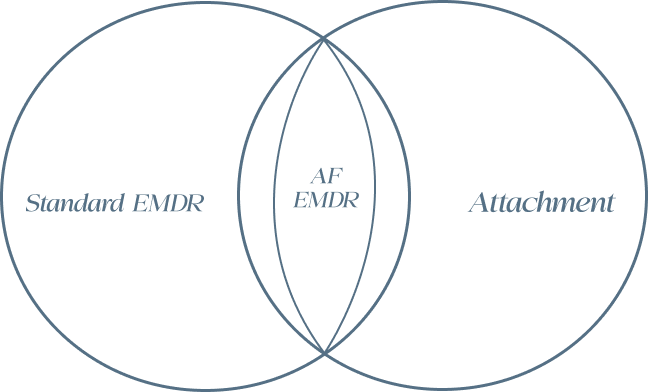
Standard EMDR processes specific traumatic memories. AF-EMDR keeps that work and adds a layer focused on relational wounds the early experiences that shaped your sense of self and your ability to connect with others. It’s the difference between treating a symptom and addressing its origin.
EMDRIA-Certified EMDR Therapist in Brentwood, LA
Intellectual insight doesn’t reset an overactive nervous system. If traditional talk therapy hasn’t shifted how you actually feel, you don’t need more talking. you need neurological processing. As an EMDRIA-Certified EMDR therapist in Brentwood, LA, I specialize in deep-root trauma recovery that systematically unburdens your system so your past stops hijacking your present.
Education & Specialized Training:
- 30+ Years of Clinical Mastery: Licensed Marriage and Family Therapist (LMFT) since March 31, 1991 (License No. MFC28220); EMDRIA Certified since 2003.
- Advanced Clinical Education: Master’s Degree in Clinical Psychology (MFT focus), specializing in trauma, severe anxiety, and relational dynamics.
- EMDRIA Certification: Holds the field’s highest independent standard for EMDR practice and fidelity.
- Specialized Modality Training: Advanced training in Attachment-Focused EMDR (AF-EMDR), Internal Family Systems (IFS Institute framework), and Somatic Therapies.
In-person care in Brentwood, West LA (90049) and secure online therapy across California.

Questions From Real Clients, No Clinical Jargon
1. Will EMDR accidentally open "Pandora’s box" or make me feel like I’m losing control?
This is the single most common fear for high-achieving, control-oriented adults. The short answer is no, because we do not push open doors your nervous system isn’t ready to unlock.
Traditional exposure therapies can sometimes flood your system, but EMDR works in brief, micro-dosed sets. You hold the steering wheel at every moment. We build solid grounding tools before touching target memories, and we never end a session while a memory feels wide open. You learn to observe your past from a safe distance rather than reliving it.
2. Can I do EMDR if I take prescription medication (like SSRIs, Adderall) or use cannabis?
Yes. Prescribed psychiatric medications, such as low-dose SSRIs, anti-anxiety medication, or ADHD stimulants, do not prevent EMDR from working.
The only requirement is that your nervous system can still access and feel subtle emotions during the session. If a medication leaves you feeling completely blunted or emotionally flat, processing can take a bit longer. During our initial consult, we discuss your routine to ensure your nervous system has enough responsive headroom to reprocess memories effectively.
3. How do I know if EMDR is actually working between sessions? What does progress feel like?
Progress in EMDR is often quiet and physiological before it becomes mental.
You’ll know it’s working when a situation that used to set off an immediate fight-or-flight reaction suddenly produces a neutral non-event. You might notice you didn’t clench your jaw during a tense meeting, didn’t over-explain yourself after setting a boundary, or simply slept through the night without an underlying hum of dread. The memory stays in your history, but its emotional charge disappears.
4. Is in-person EMDR at your Brentwood office better than online telehealth across California?
Both options are clinically effective, but they offer different environments.
In-person sessions at my San Vicente office provide a physical sanctuary: a quiet, confidential space away from work and home where you can completely step out of your daily roles. Virtual therapy across California uses secure bilateral software and offers the convenience of processing from your own home, eliminating the commute on the 405 or Wilshire. We choose the setting that best fits your lifestyle and feeling of safety.
5. How many sessions does EMDR take, and will I need to be in therapy indefinitely?
EMDR is a structured, goal-directed treatment rather than an endless open-ended talk therapy.
For a single-event target, such as a recent car accident or acute medical scare, processing can often be completed in a focused cluster of sessions. For complex, long-standing developmental or attachment themes, the work takes longer because we are updating foundational safety blueprints. We regularly review your milestones together so you always know where you are in your healing process.
6. Can EMDR help me stop repeating unhealthy relationship patterns or picking emotionally unavailable partners?
Yes. We rarely choose partners strictly with our conscious minds; we pick what feels familiar to our underlying attachment system.
If early experiences taught your body that love requires over-functioning, self-sacrifice, or anxiety, your nervous system will reflexively mistake emotional volatility for passion. Using Attachment-Focused EMDR (AF-EMDR), we reprocess those original relational experiences. Once your body realizes that emotional safety is natural, your baseline attraction shifts, and healthy, secure connection stops feeling boring or overwhelming.
In Their Own Words.
A Quiet, Private Space on San Vicente Boulevard
A Sanctuary on Brentwood, West LA
Located at 12011 San Vicente Blvd, Suite 305 (90049), my practice sits on the corner of San Vicente and Saltair Avenue along Brentwood’s coral tree corridor. The suite provides a quiet, confidential sanctuary designed for focused healing.
- Landmarks & Parking: Steps from Coral Tree Cafe and three minutes from the Brentwood Country Mart. Subterranean parking is accessible off Saltair Avenue, with metered and free 2-hour street parking nearby.
- Serving the Westside: In-person sessions for Brentwood, Santa Monica, Pacific Palisades, Westwood, Bel-Air, and Beverly Hills, alongside secure telehealth across California.
A Brentwood Practice.
With Telehealth Across CA.
My office sits on San Vicente Boulevard in Brentwood minutes from Santa Monica, West LA, and Beverly Hills. For clients across California, telehealth makes the same work possible from home.
Brentwood
Primary office · 90049
Santa Monica
20 min · Telehealth
West Los Angeles
20 min · In-person
Beverly Hills
20 min · Telehealth
Pacific Palisades
20 min · Telehealth
Culver City
20 min · Telehealth
Start with a Conversation.
No commitment, no paperwork. A chance to talk through what you’re carrying and see whether EMDR and whether I might be the right fit.